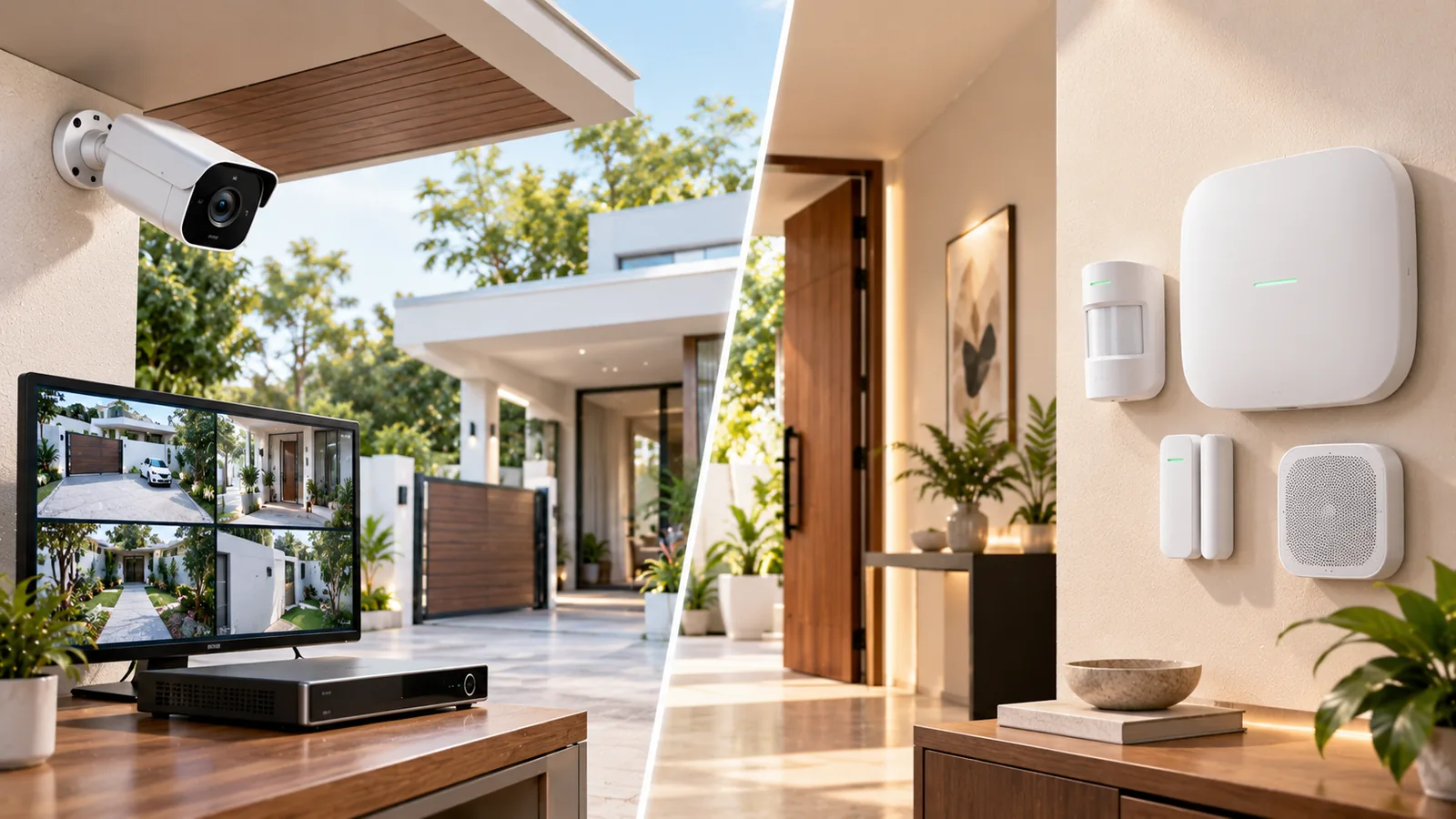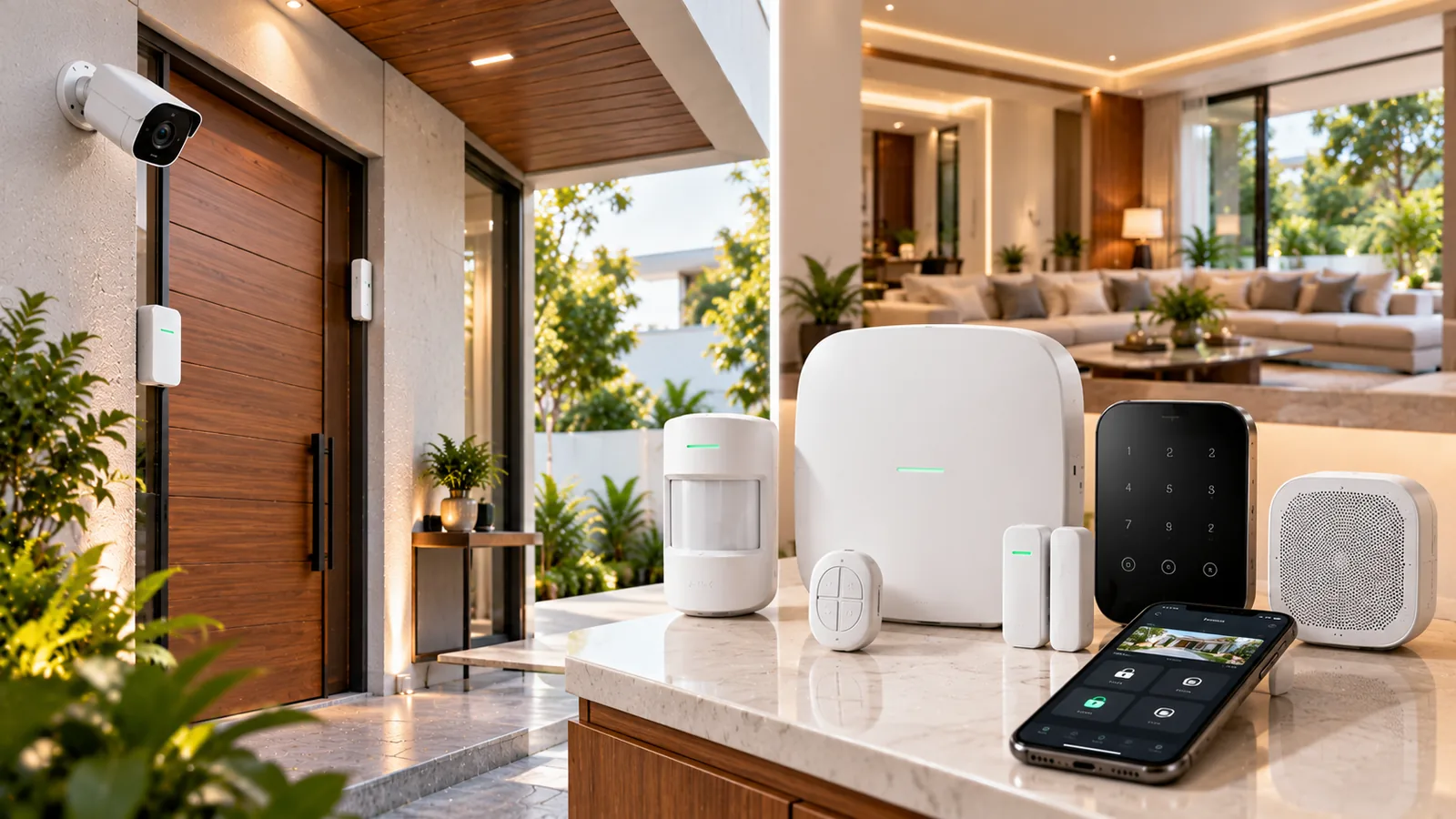
An Ajax security system is a wireless intrusion and safety alarm built around a central hub and battery-powered sensors that you control from a smartphone app. For Indian homes, the appeal of an Ajax security system in India is simple: it needs very little wiring, keeps working during power cuts, and alerts you instantly when a door opens, someone moves inside, or smoke is detected. This guide explains the main components, how coverage works in Indian houses and apartments, and how monitoring is set up.
How an Ajax Wireless System Works
Every Ajax system has a hub. Sensors communicate with it over Ajax’s own encrypted two-way radio protocol, called Jeweller, rather than over Wi-Fi. The hub connects to the internet through Ethernet, Wi-Fi or a mobile SIM depending on the model, and pushes alerts to the Ajax app on your phone.
Because communication is two-way, the hub regularly checks that each sensor is present, has battery and is not being tampered with. If a device goes offline or its cover is opened, you get a notification. This supervision is one of the main differences between a professional wireless alarm and low-cost Wi-Fi sensors.
Key Components of an Ajax Security System
Hub
The hub is the brain of the system. Different hub models support different numbers of devices and connection options; models with Ethernet plus SIM give a backup path if broadband fails. The hub has its own backup battery for power cuts.
Intrusion detectors
- Door and window contacts: magnetic sensors that detect when a door, window or grille is opened.
- Motion detectors: PIR sensors for halls and corridors, with pet-immune options for homes with dogs or cats.
- Outdoor motion detectors: for compounds, terraces and car porches, designed to reduce false alarms from weather.
- Glass-break detectors: listen for the sound of breaking glass in rooms with large windows.
- Motion detectors with photo verification: capture a short series of images when triggered.
Safety detectors
- Fire detectors for smoke and heat in kitchens, bedrooms and electrical rooms.
- Leak detectors placed near washing machines, water heaters and under sinks.
Control and alert devices
- Indoor and outdoor sirens to scare intruders and alert neighbours.
- Keypads for arming and disarming without the app, useful for elderly family members and staff.
- Key fobs and panic buttons for quick arming or emergency alerts.
- Range extenders to cover larger villas, multi-floor houses and outbuildings.
Coverage in Indian Homes and Apartments
Ajax radio range is long in open space, but Indian homes are built with thick brick walls, RCC slabs and steel grilles, all of which reduce signal. In a typical apartment, a single hub placed centrally covers the whole flat. Independent houses with two or three floors, or villas with a separate servant’s quarters or garage, may need a range extender.
| Apartment | Independent house / villa | |
|---|---|---|
| Typical entry points | Main door, balcony doors, a few windows | Gate, multiple doors, many windows, terrace |
| Main sensors | Door contact, one or two motion detectors | Contacts on all doors, indoor and outdoor motion, sirens |
| Range extender | Rarely needed | Often useful for multiple floors or outbuildings |
| Outdoor siren | Usually not required | Recommended to alert neighbours |
Monitoring: App Alerts, Family Users and Scenarios
Most Indian homeowners use Ajax in self-monitoring mode. Alerts arrive on the app, and you can add family members as users with different permissions so that more than one person is notified. You can arm the whole house when leaving, or use a night mode that arms only perimeter sensors while people sleep inside.
- Groups: arm the ground floor separately from upper floors, or a shop area separately from the residence above.
- Schedules: automatically arm the system at a set time each night.
- Scenarios: trigger lights or relays when an alarm occurs, depending on the devices installed.
- Event history: a log of who armed or disarmed the system and when.
Ajax for Tamil Nadu Conditions
Long power cuts, heat and humidity are real concerns in Chennai and other parts of Tamil Nadu. Battery-powered sensors are unaffected by outages, and the hub’s backup battery keeps the system online for hours. For coastal homes, outdoor devices should be mounted under shade or eaves where possible to limit rain and salt exposure, and sensor batteries should be checked when the app warns that they are low.
Getting an Ajax System Planned and Installed
A wireless alarm is only as good as its sensor placement. Sensor Home Automation begins with a free consultation and site visit to map every entry point, test signal strength through your walls and recommend the right hub and detectors. Our own installation team mounts and configures the system, adds family users to the app, tests every sensor and siren, and trains you on arming modes. We continue to support you after handover, across Chennai, Salem and the rest of Tamil Nadu.
Frequently asked questions
Is the Ajax security system available in India?
Yes, Ajax hubs, sensors and sirens are sold and installed in India through security integrators. A local installer can help you choose the right hub model and detectors for your home.
Does Ajax work during a power cut?
Yes. Ajax sensors run on batteries and the hub has a built-in backup battery. For alerts to reach your phone during a long outage, the router should be on an inverter or the hub should have a SIM card.
Do Ajax sensors need wiring?
No, Ajax detectors are wireless and battery-powered, so installation involves very little drilling or cabling. Only the hub needs a power point and, ideally, an Ethernet connection.
Can I add CCTV cameras to an Ajax system?
Ajax can work alongside many CCTV setups, and compatible cameras can be viewed in the Ajax app. Your installer can confirm compatibility for the camera brand you choose.
Related service: Security Systems — see how Sensor plans, installs and supports it across Chennai, Salem and Tamil Nadu.