Curtain automation replaces pulling curtains by hand with a quiet motor on a track, controlled by a switch, remote, app, schedule or voice. It is most useful for wide windows, tall double-height living rooms, bedrooms you want dark in the morning and rooms that face the harsh Chennai afternoon sun. This guide covers the tracks, motors and controls you can choose between, and what decides a good installation.
What curtain automation can control
- Ripple-fold and pinch-pleat curtains on a motorised track.
- Roller blinds and blackout blinds with a tubular motor inside the roller.
- Zebra (day-night) blinds and Roman blinds with compatible motors.
- Venetian blinds, where the motor tilts and lifts the slats.
- Sheer and blackout layers on a double track, controlled separately.
Tracks and motors: the core of the system
Motorised curtain tracks
An aluminium track holds runners connected by a belt. A motor at one end drives the belt, opening the curtain from the centre or to one side. Tracks can be ceiling-mounted or wall-mounted, straight or bent to follow a bay window. Ceiling mounting in a false ceiling pocket gives the neatest look.
Wired vs battery motors
| Wired (mains) motor | Battery motor | |
|---|---|---|
| Power | Needs a power point near the track | Rechargeable battery |
| Best for | New builds and renovations | Retrofits without chasing walls |
| Charging | Never | Periodic recharge |
| Heavy curtains | Handles larger weights | Suited to lighter fabrics |
| Power cuts | Needs inverter backup | Keeps working on battery |
Control options for curtain automation
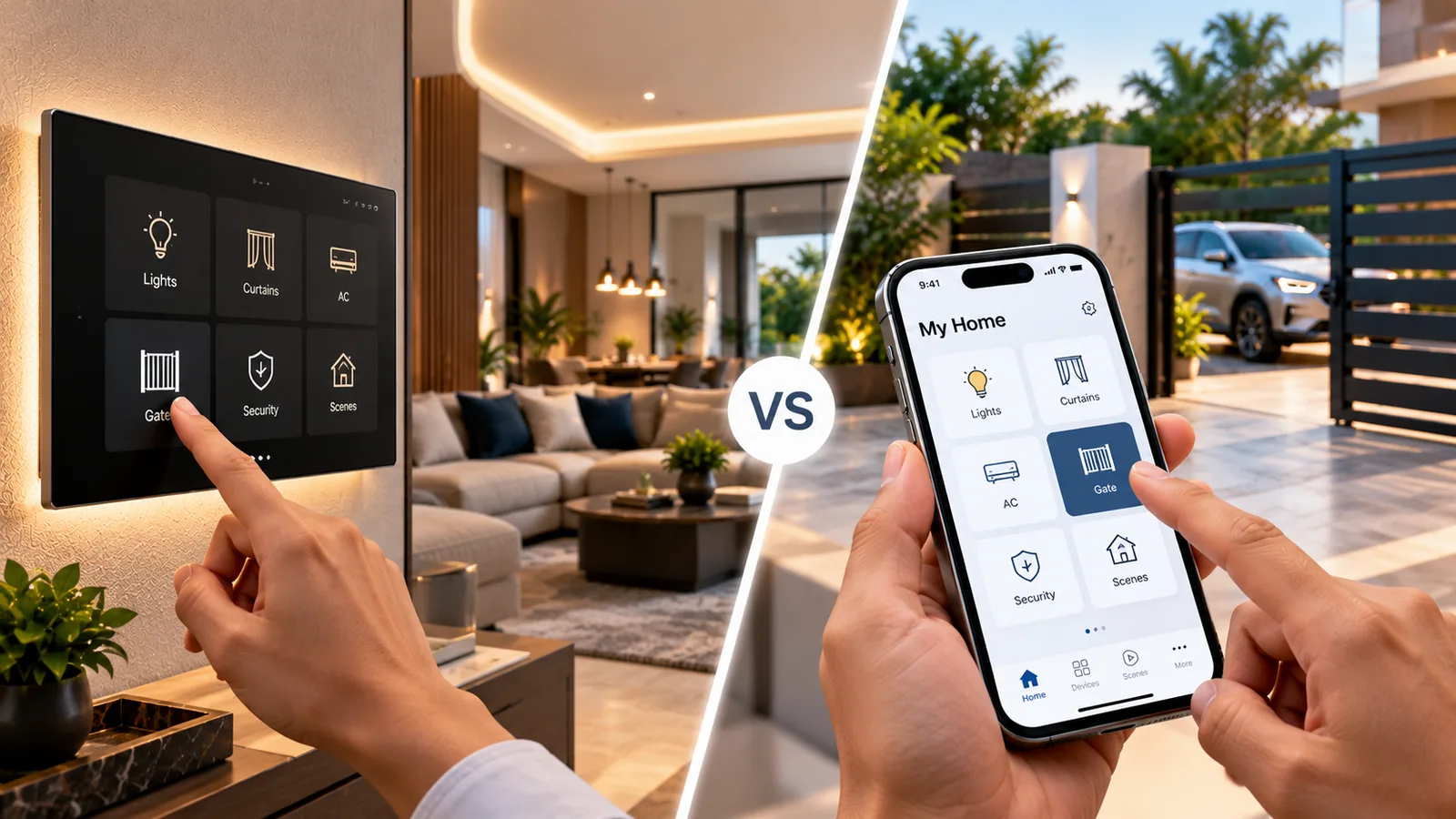
Motorised curtains can be controlled in several ways, and most homes use a mix:
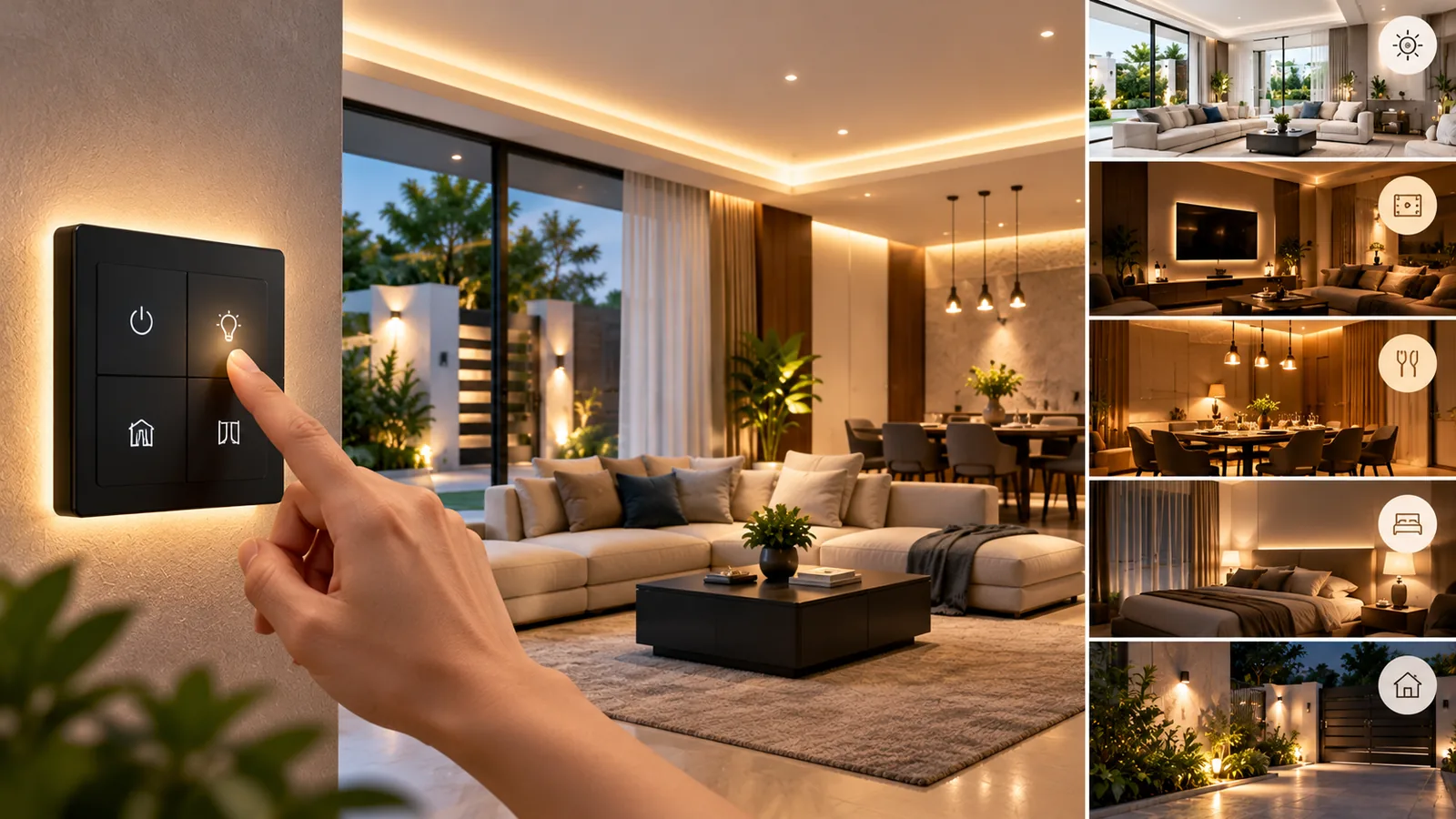
- 1Wall switch or touch panel button by the window or bedside.
- 2Handheld remote for sofas and beds.
- 3Smartphone app, through Wi-Fi or a Zigbee hub on platforms such as Tuya.
- 4Voice control through Alexa: ‘Alexa, close the bedroom curtains’.
- 5Schedules and scenes, such as opening the curtains at sunrise or closing them with a ‘Movie’ scene.
- 6Touch-and-go, where a gentle tug on the curtain starts the motor (on supported models).
Why it suits Tamil Nadu homes
West-facing rooms in Chennai and Salem take a lot of heat in the afternoon. A schedule that closes curtains or blackout blinds before the sun hits the glass keeps rooms cooler and reduces the load on air conditioners. When combined with AC automation, a single ‘Afternoon’ scene can close curtains and set the AC together.
Automation also helps with large windows that are hard to reach, elderly family members who find heavy blackout curtains difficult, and security — curtains that open and close on a schedule make a house look occupied when you travel.
Planning checklist before installation
- Measure each window’s width and the ceiling or wall above it.
- Decide whether curtains open from the centre or to one side.
- Check fabric weight; heavy blackout curtains need a stronger motor.
- Confirm space for the motor at the track end and a power point if wired.
- Choose the control method for each room, and whether you want app and voice control.
- Plan any double tracks for sheer and blackout layers together.
Humidity and dust affect fabric more than motors, but tracks should be wiped occasionally and kept free of obstructions. Any wiring at the motor should be done by a technician, not as a DIY job.
Common curtain automation mistakes to avoid
- Choosing the motor before the fabric: a heavy lined blackout curtain may need a stronger motor than a sheer, so finalise the curtains first.
- Mounting the track too close to the window: handles, grilles and AC units can block the curtain’s path.
- Forgetting the stack-back space: when open, the curtain bunches at the ends and can cover part of the glass if the track is too short.
- Mixing several apps: picking motors that work on the same platform as your lighting and touch panels keeps scenes and voice control simple.
- Leaving no manual option: make sure the curtain can still be moved by hand or by a wall switch if the network is down.
Avoiding these early saves rework later. If your interior designer is choosing fabrics, introduce them to the automation team so the track, motor and curtain are specified together.
What decides a curtain automation quote
The number of windows, track length, wired or battery motors, single or double tracks, the control system and whether new curtains are needed all affect the final figure. A site visit with measurements is the only way to get an exact quote.
Curtain automation with Sensor
Sensor Home Automation plans curtain automation as part of the whole home — lighting, AC, touch panels and voice control working together. Our free consultation includes measurements, motor recommendations and a control plan for each room. Our own team installs and tests the tracks and motors, sets up scenes and schedules, trains your family and provides ongoing support across Chennai, Salem and Tamil Nadu.
Frequently asked questions
Can I automate my existing curtains?
Often yes. Many existing curtains can be rehung on a motorised track with new runners or hooks. Very heavy or unusual fabrics may need adjustment, which a technician will assess.
Are motorised curtains noisy?
Good-quality curtain motors are quiet and suitable for bedrooms. Noise levels vary by model, so ask to hear one if it matters to you.
Do battery curtain motors need frequent charging?
Charging intervals depend on how often the curtains move and the curtain weight. Typical household use means occasional charging rather than frequent top-ups.
Can curtain automation work with Alexa?
Yes. Most smart curtain motors connect to Alexa through their app or a hub, letting you open and close curtains by voice or include them in routines.
Related service: Home Automation — see how Sensor plans, installs and supports it across Chennai, Salem and Tamil Nadu.