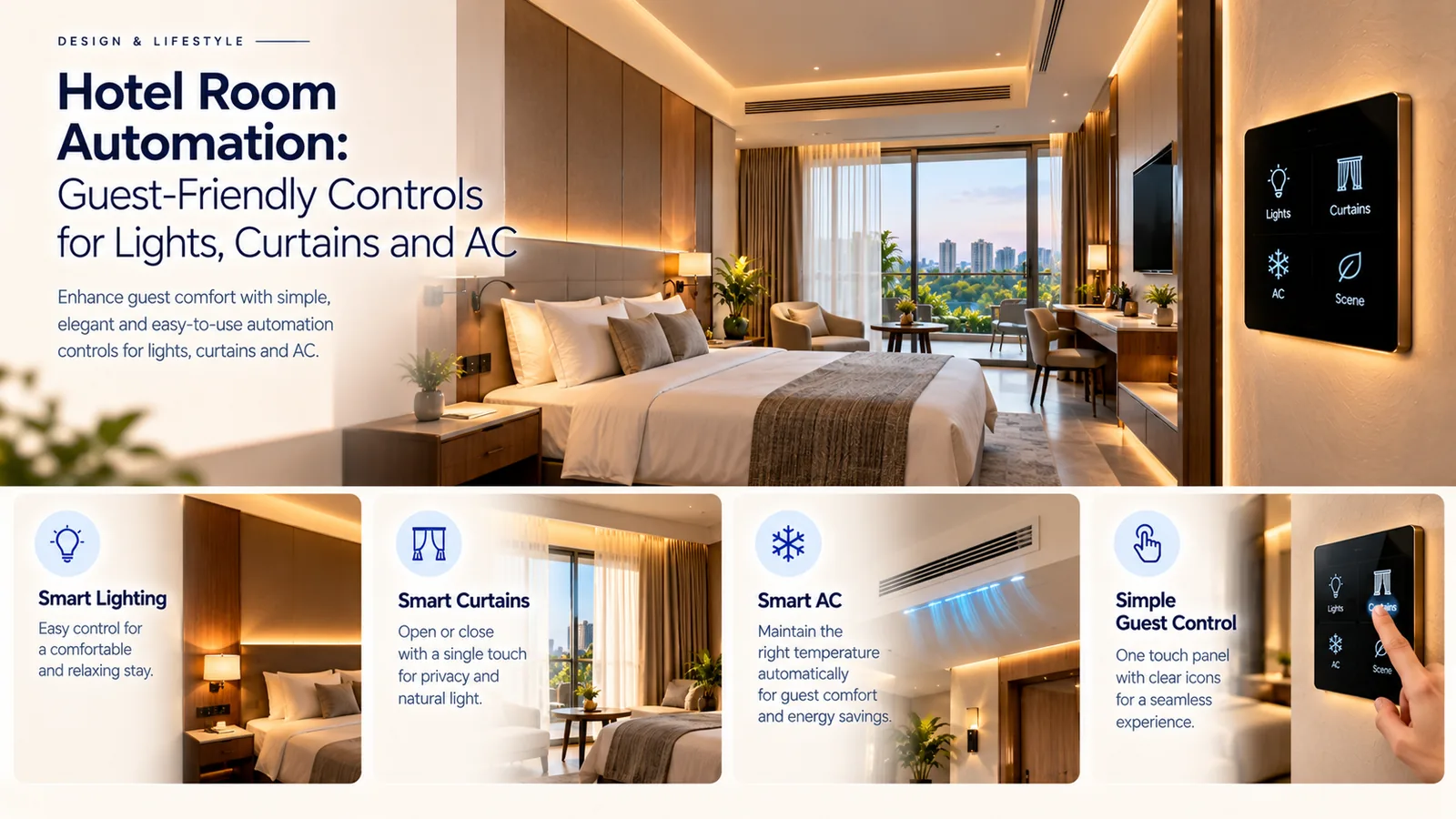
Good touch panel switch design means choosing a finish, colour and layout that blend with your walls, while keeping the controls easy for everyone in the family to use. The right panel looks like part of the interior rather than a gadget stuck on the wall.
Switches are among the most-touched objects in any home, and they sit at eye level in every room. Here is how to match automation hardware to your interiors, from finishes and colours to button layouts and placement.
Common Touch Panel Finishes
Tempered glass
Glass panels are the most popular choice for automated homes. They have a smooth, flat face with backlit icons, and come in black, white, grey and sometimes gold or champagne frames. Glass is easy to wipe clean and handles humidity well.
Brushed metal and aluminium
Metal-finish panels suit contemporary and industrial interiors. They work with physical push buttons or capacitive touch, and pair well with metal handles, profile lights and dark wood.
Modular plates with smart modules
If you love your existing modular switch range, smart modules behind the board keep that look. This is common in finished homes where changing every plate would clash with the rest of the electrical fittings.
| Glass touch panel | Physical push-button panel | |
|---|---|---|
| Look | Flat, minimal, backlit icons | Classic with visible buttons |
| Feel | Light touch, no click | Tactile click, easy to feel in the dark |
| Cleaning | Wipes clean easily, shows fingerprints | Gaps can collect dust |
| Best for | Living rooms, bedrooms, modern interiors | Elders, kids' rooms, utility spaces |
Choosing Colours That Suit Your Walls
- White or light grey on light walls makes panels almost disappear.
- Black glass looks striking on dark accent walls, wood panelling and stone cladding.
- Gold or champagne frames suit traditional Indian interiors with brass and teak accents.
- Keep one colour per floor or zone so the home looks consistent.
- Check the backlight colour and brightness; a soft white or warm glow is gentler in bedrooms at night.
Button Layout and Labelling
A beautiful panel that nobody can use is a design failure. Plan the layout so that each button makes sense without explanation.
- 1Group buttons by area: entry lights, main lights, fan, then scenes.
- 2Use clear icons or engraved labels rather than identical blank keys.
- 3Put the most-used button where the thumb naturally lands.
- 4Keep scene keys like ‘All Off’ or ‘Movie’ in the same position on every panel.
- 5Avoid cramming too many functions on one plate; split them across two panels if needed.
Placement, Height and Box Planning
Coordinate panel positions with your interior designer before carpentry and painting begin. Panels should not end up hidden behind wardrobe doors, curtains or a TV unit, and bedside panels should be reachable from the bed. Standard switch heights work for most families, but entrance and bedside panels may be lowered slightly for convenience.
- Confirm the panel size matches the switchbox: many glass panels need specific box dimensions.
- Plan a neutral wire to every panel location.
- Leave space for future curtain, AC or scene keys.
Matching panels with the rest of your fittings
Switch panels sit alongside sockets, AC points, door handles and light fittings. If you are changing only some switchboards to touch panels, consider whether the remaining plates will look out of place. Many families use touch panels in the living, dining and master bedroom, and keep standard modular plates with hidden smart modules in kitchens, utility areas and children's rooms. Another approach is to pick a socket range in the same colour family as the panels, so the wall looks planned even where the hardware differs.
Climate and Durability in Tamil Nadu
Chennai's humidity and coastal air can affect electronics over time. Choose panels from established brands, keep them away from direct water splashes near wash basins, and avoid installing standard indoor panels in open verandas or bathrooms. Clean glass panels with a soft, dry or slightly damp cloth, never spray liquid directly onto them.
How Sensor Matches Panels to Your Interiors
Sensor Home Automation installs touch panels as part of its smart lighting and home automation services. During the free consultation and site visit, the team looks at your interiors, wall colours and switchbox sizes, helps you plan touch panel switch design and layouts, and coordinates positions with your designer. Its own installation team fits and tests every panel, followed by training and ongoing support. Call +91 95975 75785 or write to support@sensorhomeautomation.in.
Frequently asked questions
Are glass touch panels durable?
Panels made with tempered glass from established brands are designed for daily use and are easy to clean. They should be installed in dry indoor locations and protected from direct water splashes.
Can touch panels fit in my existing switchboxes?
Some can, but many glass panels need specific box sizes. A technician can check your boxes during a site visit and suggest compatible panels or a smart module instead.
Which colour touch panel suits Indian interiors?
White suits light walls, black suits dark accent and wood walls, and gold or champagne frames suit traditional interiors with brass or teak. Keeping one colour per zone looks most consistent.
Are touch panels easy for elderly family members?
Clear labels, backlit icons and a sensible layout make them easy to use. Some elders prefer tactile push-button panels, which can be used in their rooms while other rooms use glass panels.
Related service: Home Automation — see how Sensor plans, installs and supports it across Chennai, Salem and Tamil Nadu.