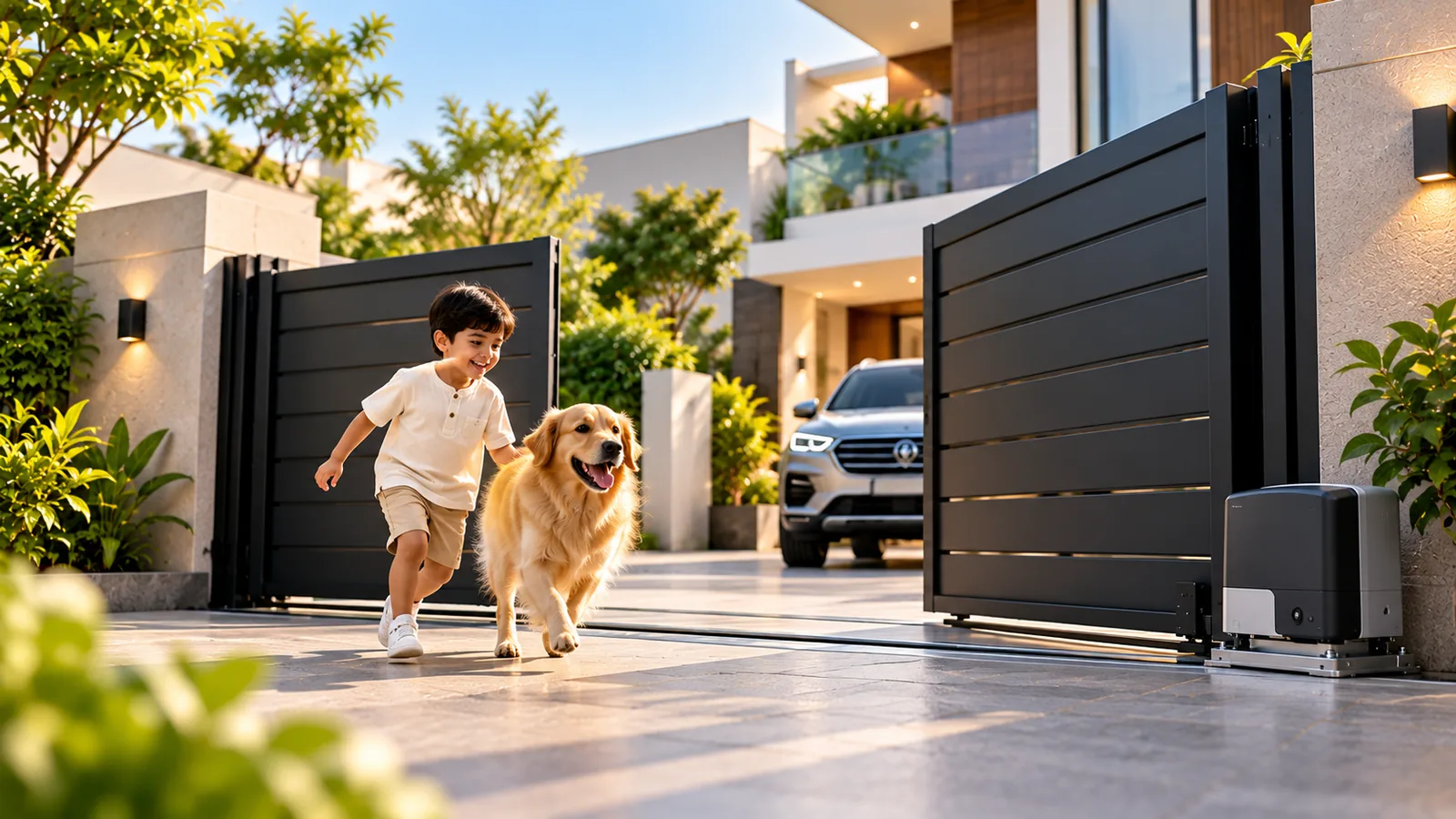
Automatic gates can be safe for children and pets, but only when they are installed with the right safety devices, set up correctly and maintained. Automatic gate safety for children depends on three things working together: sensors that detect anyone in the gate’s path, a motor and control board that stop and reverse gently, and simple household rules. This review explains each layer in practical terms.
Where the risks actually are
A moving gate is heavy, and the main hazards are predictable. Knowing them helps you check whether your own gate is properly protected.
- Impact: a closing gate striking a child, pet or bicycle in the opening.
- Crushing: a person trapped between the gate and the pillar, wall or a parked car.
- Shearing and pinching: fingers caught at hinges, between folding panels, or between a sliding gate and its post.
- Climbing and riding: children climbing on or riding a moving gate.
- Unseen pets: small dogs and cats lying near the gate where a driver cannot see them.
Essential safety devices for automatic gate safety
Photocell sensors
Photocells send an infrared beam across the opening. If anything breaks the beam while the gate is closing, the control board stops and reverses it. For homes with small children and pets, a second pair mounted lower down catches smaller bodies the standard pair might miss.
Obstacle detection and force limiting
Modern control boards sense extra resistance from the motor and reverse the gate if it meets an obstruction. The force setting should be adjusted by the installer so the gate is strong enough to move against wind but gentle enough to stop quickly on contact.
Safety edges, lamps and limit switches
Rubber safety edges on the leading edge of a gate add a contact sensor that triggers a reversal. A flashing lamp warns everyone that the gate is about to move. Limit switches stop the gate at exactly the right point so it does not over-travel into a wall or post.
| Basic installation | Family-safe installation | |
|---|---|---|
| Photocells | One pair or none | One standard pair plus a low pair |
| Obstacle detection | Factory setting | Force adjusted on site and tested |
| Warning | None | Flashing lamp, optional beep |
| Safety edges | Not fitted | Fitted where crushing is possible |
| Pinch points | Left open | Gaps covered or guarded |
Gate design matters as much as sensors
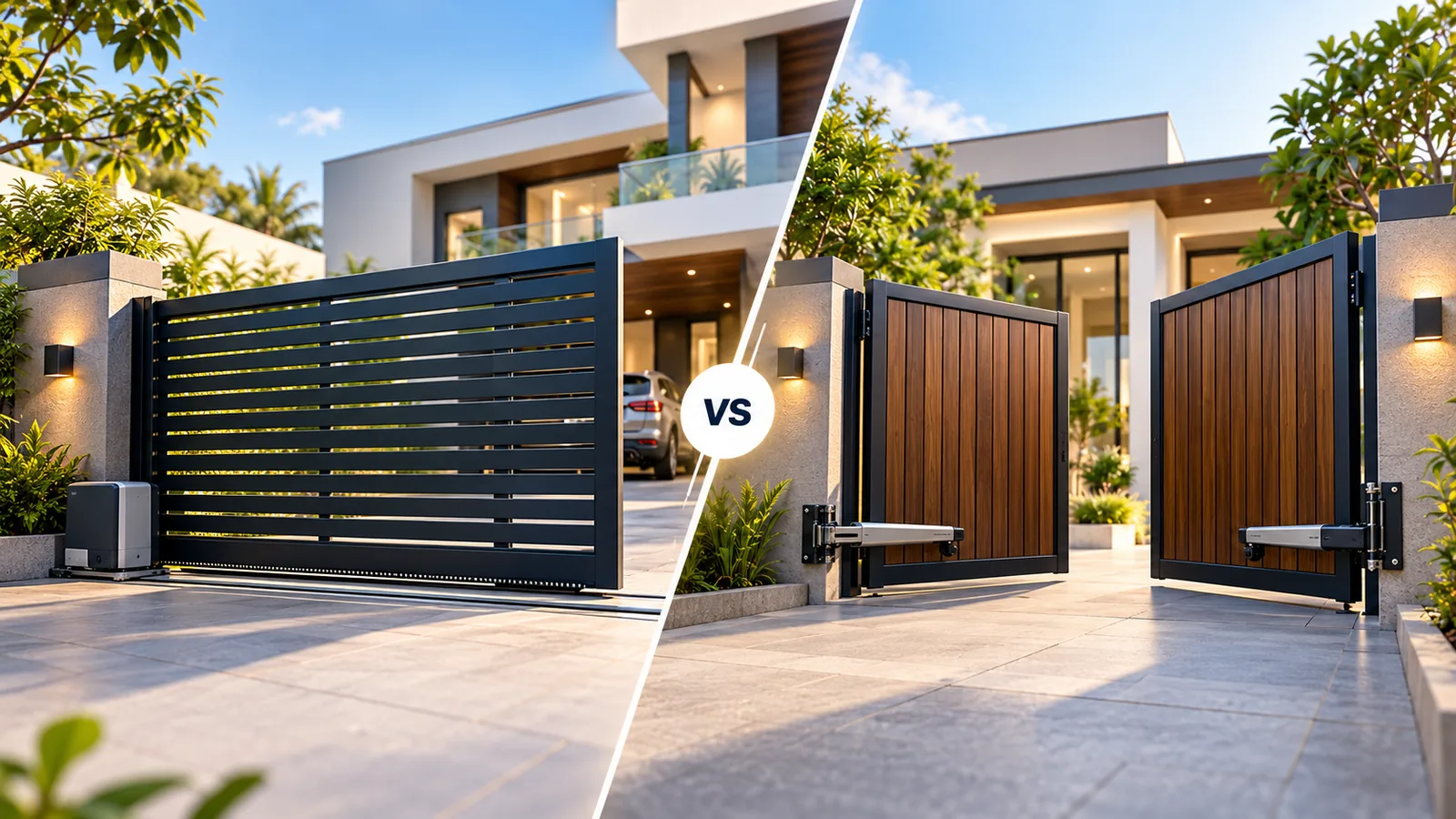
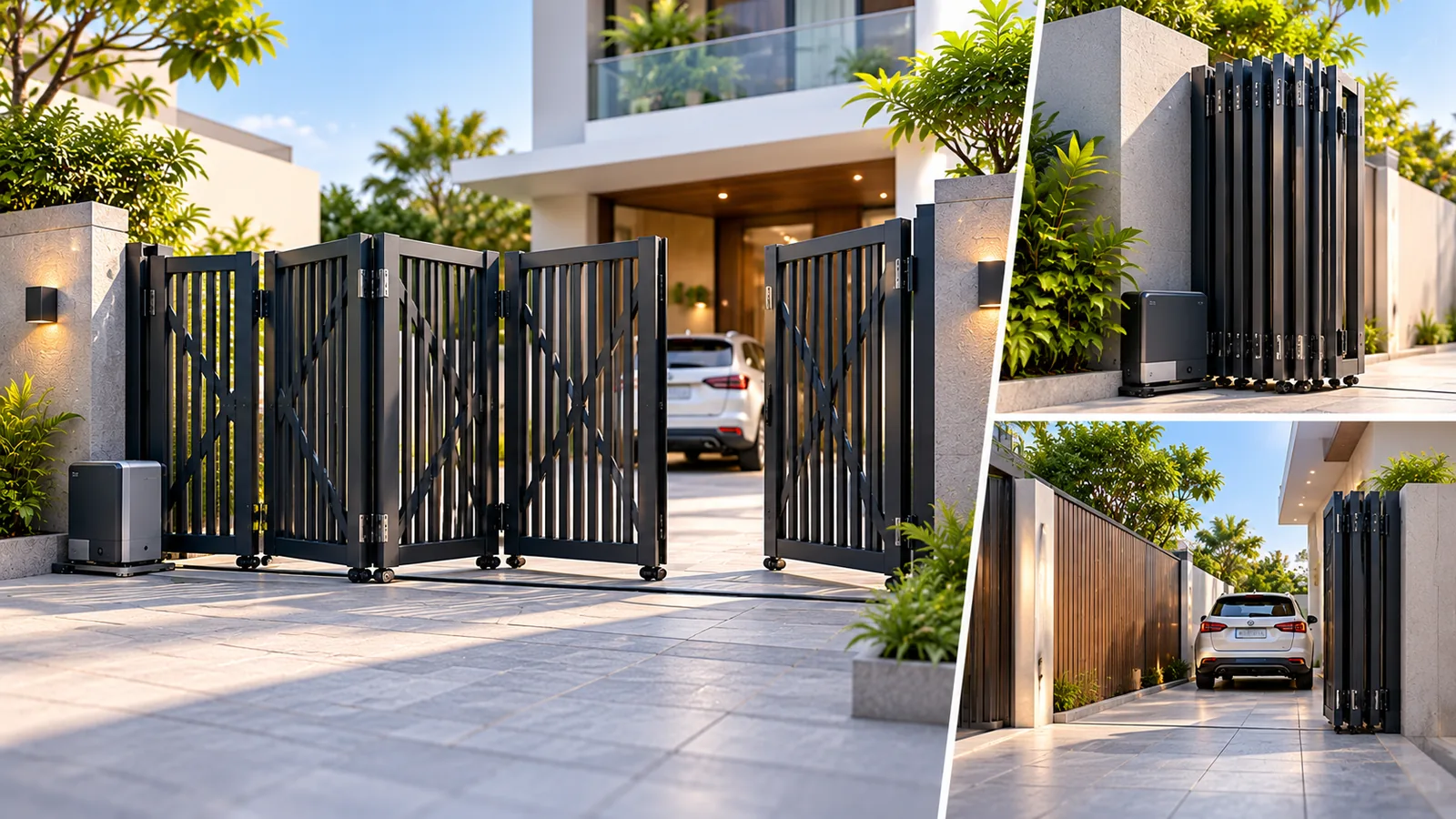
Sensors cannot fix a dangerous design. Gates with wide gaps between bars can trap a child’s head or a pet’s body. Horizontal bars act like a ladder. Sliding gates need a safe gap at the open end, and the space between the gate and the post should be covered with mesh or a guard where little hands could reach in. For folding gates, the hinge zone between panels needs particular attention.
Simple household rules that make a big difference
- 1Keep remotes and phones with gate control away from young children.
- 2Teach children never to play near, climb or ride on the gate, and never to run through it while it moves.
- 3Wait until the gate stops fully before driving or walking through.
- 4Check the driveway and the gate area for pets before closing, especially at night.
- 5Mount any wall push-button or keypad high enough that small children cannot reach it.
- 6Disable auto-close, or set a longer delay, if children often play in the front yard.
Testing and maintenance
Safety devices only help if they work. Once a month, place a cardboard box in the gate’s path while it closes; it should stop and reverse. Wipe the photocell lenses, since dust, cobwebs and monsoon grime can block the beam or make it unreliable. Have a technician inspect the control board settings, motor and wiring periodically. Do not open the motor, control box or electrical panel yourself — call a qualified technician for any adjustment or fault.
During power cuts, the gate should either keep working on backup with all sensors active, or be switched to manual mode. Make sure adults in the house know where the manual release key is and how to use it safely.
How Sensor makes gates safer for families
When we plan an automatic gate, automatic gate safety for children and pets is part of the design, not an add-on. Sensor Home Automation’s free site visit includes a look at pinch points, sensor positions and how your family uses the entrance. Our own team installs and tests the photocells, obstacle detection and warning devices, shows everyone how the gate and manual release work, and stays available for ongoing support and maintenance. We serve families in Chennai, Salem and across Tamil Nadu.
Frequently asked questions
Will an automatic gate stop if a child walks in front of it?
It should, if photocells and obstacle detection are fitted and working. The gate stops and reverses when the beam is broken or it meets resistance. Monthly testing confirms this is still the case.
Are photocells enough to protect small pets?
A standard pair is mounted at car-bumper height and may miss a small dog or cat. Adding a lower pair of photocells, combined with careful driving and supervision, gives better protection.
How often should automatic gate safety features be tested?
A quick home test once a month is sensible, along with cleaning the photocell lenses. A technician should inspect the force settings, wiring and motor periodically.
Can I upgrade safety on my existing automatic gate?
Usually yes. Extra photocells, safety edges, a flashing lamp and guards for pinch points can be added to most existing gates. A technician will check that the control board supports them.
Related service: Gate & Access Automation — see how Sensor plans, installs and supports it across Chennai, Salem and Tamil Nadu.